Post-Extreme Event Learning Tool
PELT is a structured post-event learning process that helps communities and practitioners reflect on what happened, identify drivers of risk, and develop pathways for future adaptation.
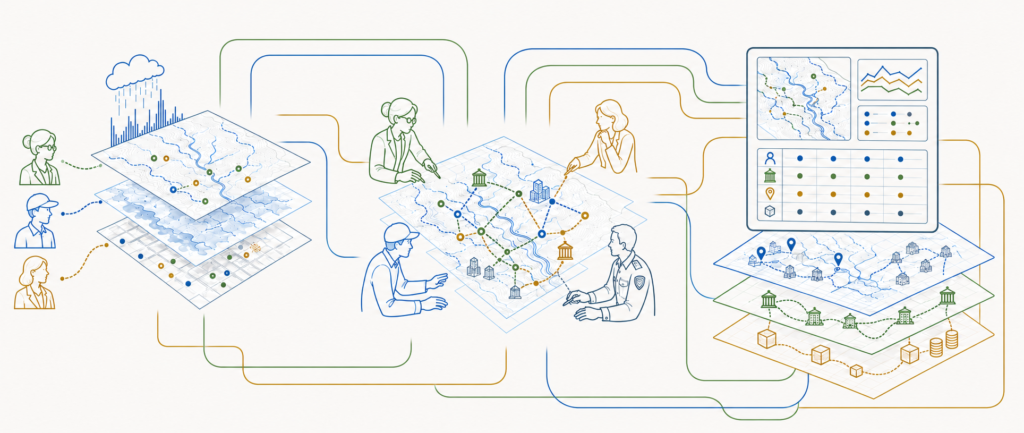
Turning post-event attention into long-term learning
In the aftermath of an extreme event, communities face two urgent tasks: responding to immediate impacts and preparing for the risks ahead. Yet the pressures of recovery can make it difficult to step back, connect different experiences, and examine the deeper conditions that shaped what happened.
Extreme events can reveal more than the immediate hazard. They can expose outdated infrastructure, fragmented responsibilities, gaps in public communication, unequal access to resources, and decisions that have accumulated risk over time. Although these moments may open a policy window for change, urgency alone does not produce meaningful adaptation.
PELT is a structured and adaptable process that creates space for collective post-event learning. It brings together lived experience, local knowledge, climate and risk information, and professional expertise to help participants move from describing impacts to understanding their drivers and considering what needs to change.
What PELT helps communities do
- Develop a shared understanding of an extreme event and its impacts.
- Connect lived experiences with technical and environmental information.
- Identify immediate, contextual, and underlying drivers of risk.
- Recognize knowledge, governance, funding, and capacity gaps.
- Develop locally relevant adaptation pathways.
- Translate workshop learning into findings, recommendations, and possible next steps.
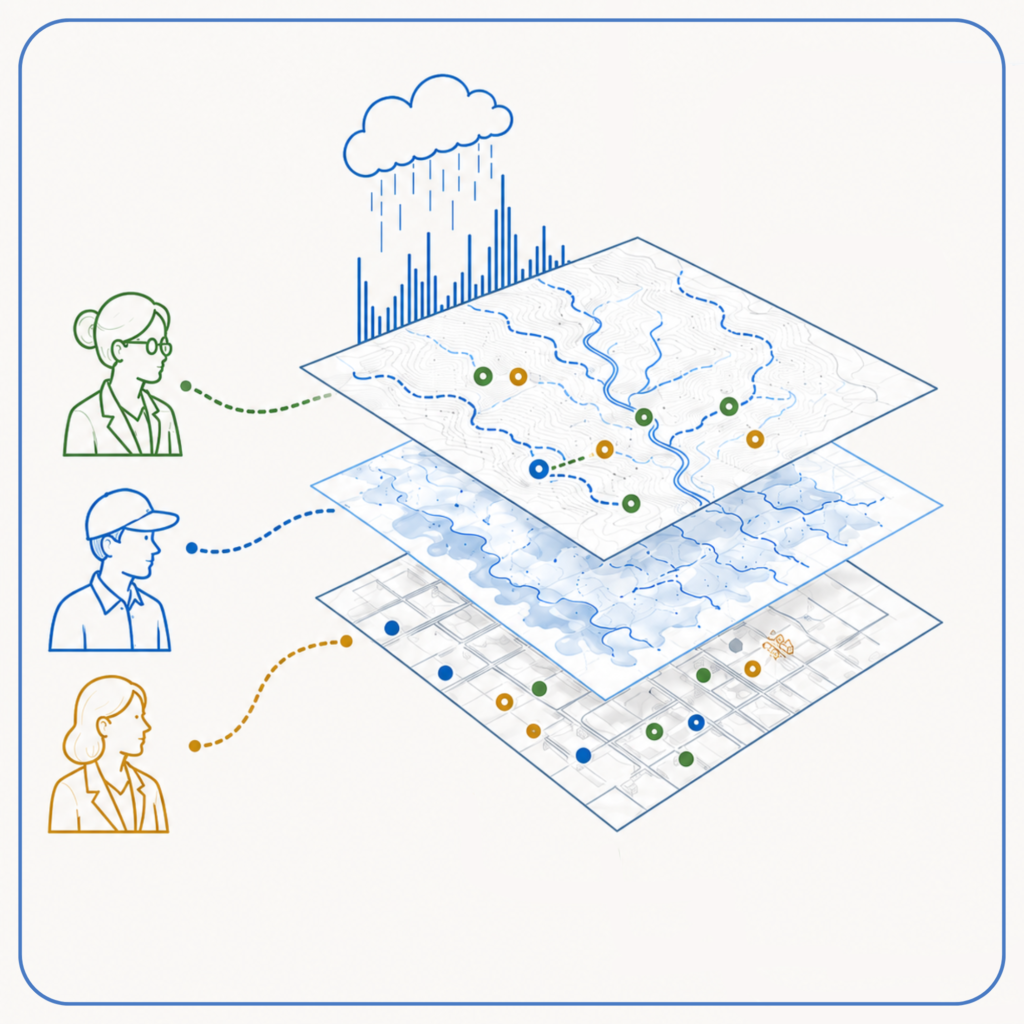
Step 1 — Prepare: Build a shared evidence base
Before the workshop, the PELT team works with a trusted local partner to develop a detailed picture of the event and its context. The team gathers climate and hazard information, documents damages and disruptions, maps affected locations and infrastructure, and reviews relevant plans, policies, and recovery efforts. The team also speaks with emergency managers, municipal and state officials, policy practitioners, infrastructure professionals, and others with relevant knowledge of the event.
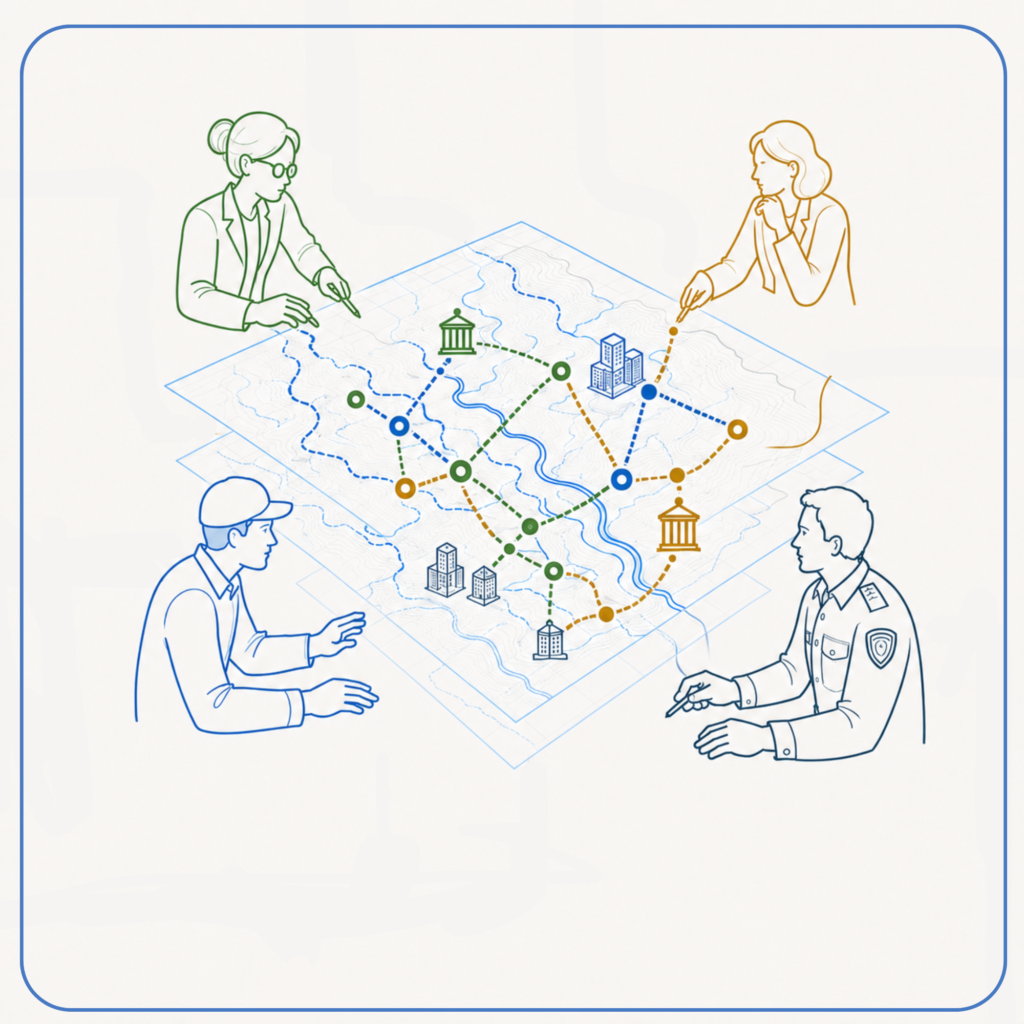
Step 2 — Workshop: Move from impacts to collective understanding
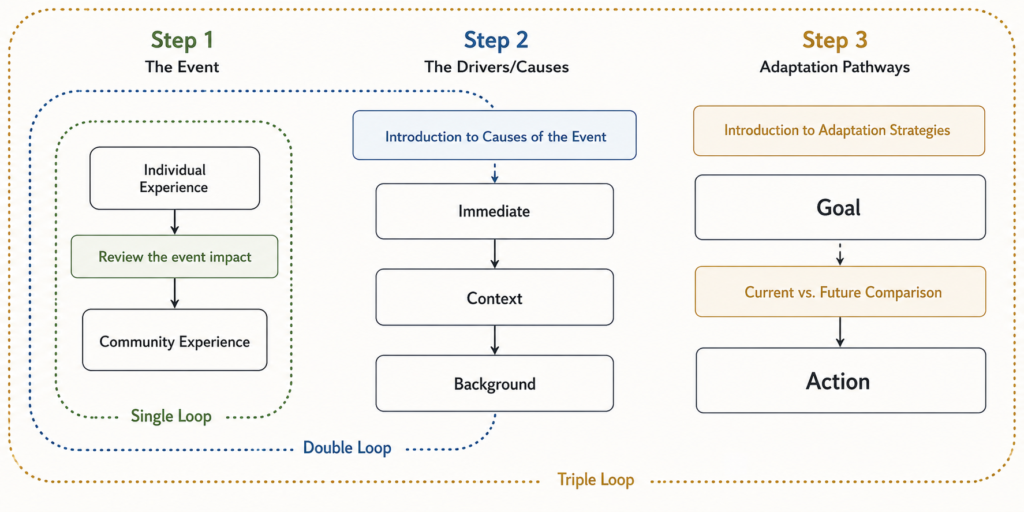
PELT brings relevant stakeholders together through one workshop or a short series of connected workshops and presentations. Participants begin with their own experiences and knowledge of the event before examining its wider community impacts. Facilitated discussion then connects these impacts to immediate, contextual, and underlying drivers of risk. Participants consider how existing emergency response, planning, coordination, infrastructure, funding, and policy processes functioned—and where they could be improved.
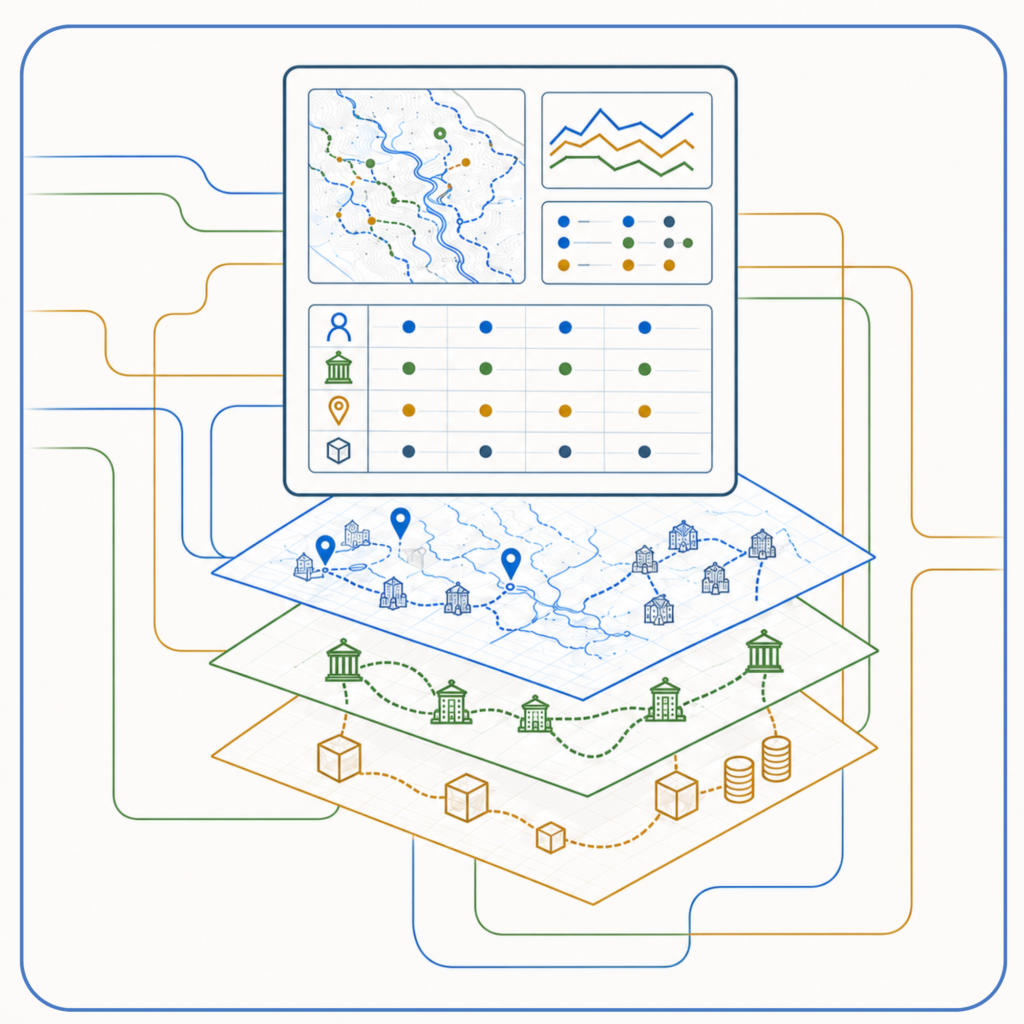
Step 3 — Synthesize and Report: Turn the process into a usable record
After the workshop, the PELT team analyzes the discussion alongside the evidence gathered during preparation. In consultation with the local partner, the team develops a report documenting the event, the workshop process, and the knowledge produced through the engagement. The report summarizes key findings, identifies information and policy gaps, documents barriers and unresolved questions, and presents locally relevant recommendations and possible next steps.
Learning Through PELT
Individual reflection
Participants consider what they experienced, what they know about the event, and where their understanding may be incomplete.
Collective knowledge production
Different experiences, observations, and forms of expertise are brought together to develop a fuller understanding of the event, its impacts, and its drivers.
Collaborative action learning
Participants consider what could be improved, what broader changes may be needed, and what resources, capacities, and relationships would be required to move forward.
Individual reflection
Participants consider what they experienced, what they know about the event, and where their understanding may be incomplete.
Collective knowledge production
Different experiences, observations, and forms of expertise are brought together to develop a fuller understanding of the event, its impacts, and its drivers.
Collaborative action learning
Participants consider what could be improved, what broader changes may be needed, and what resources, capacities, and relationships would be required to move forward.
The Team
PELT was developed by an interdisciplinary research team working across climate adaptation, geography, environmental planning, and community-engaged research.
William Solecki ([email protected])
Department of Geography and Environmental Science, Hunter College, CUNY
Charles Overton ([email protected])
Earth and Environmental Science Program, The Graduate Center, CUNY
Parisa Setayesh ([email protected])
Earth and Environmental Science Program, The Graduate Center, CUNY
Erin Friedman ([email protected])
Department of Geography and Environmental Science, Hunter College, CUNY
Simon Gruber
Center for Sustainable Cities, Hunter College
Resources
PELT is part of the Social Dimensions of Adaptation research conducted through the Consortium for Climate Risk in the Urban Northeast (CCRUN). This research examines how communities learn following extreme events and how collective learning can strengthen preparedness and support adaptation action.
- Handbook: A practical guide to preparing, facilitating, and following up on a PELT engagement.
- 2024 Mid-Hudson Valley Application Report
Research Support
PELT is a research initiative of the Consortium for Climate Risk in the Urban Northeast (CCRUN). This research was supported in part by the National Oceanic and Atmospheric Administration’s Climate Adaptation Partnerships Program.

